Diamond earrings
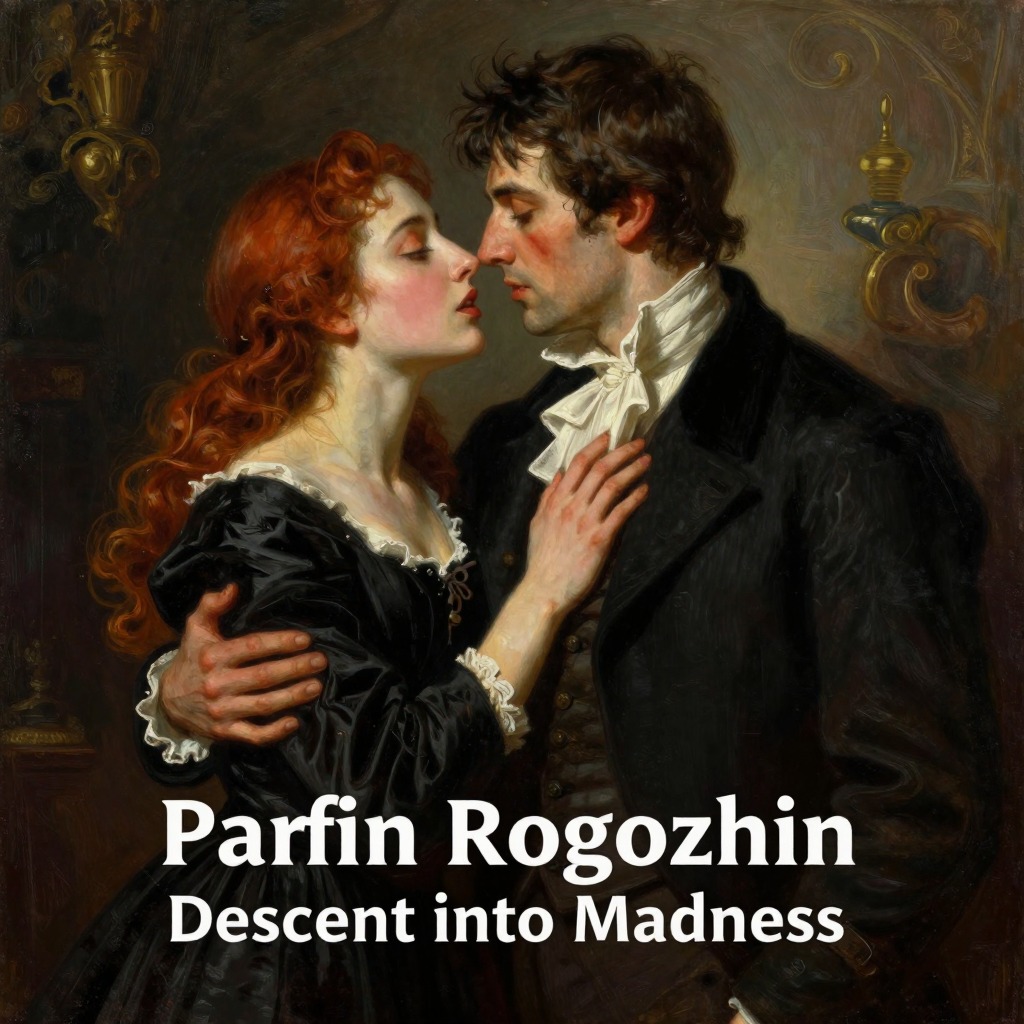
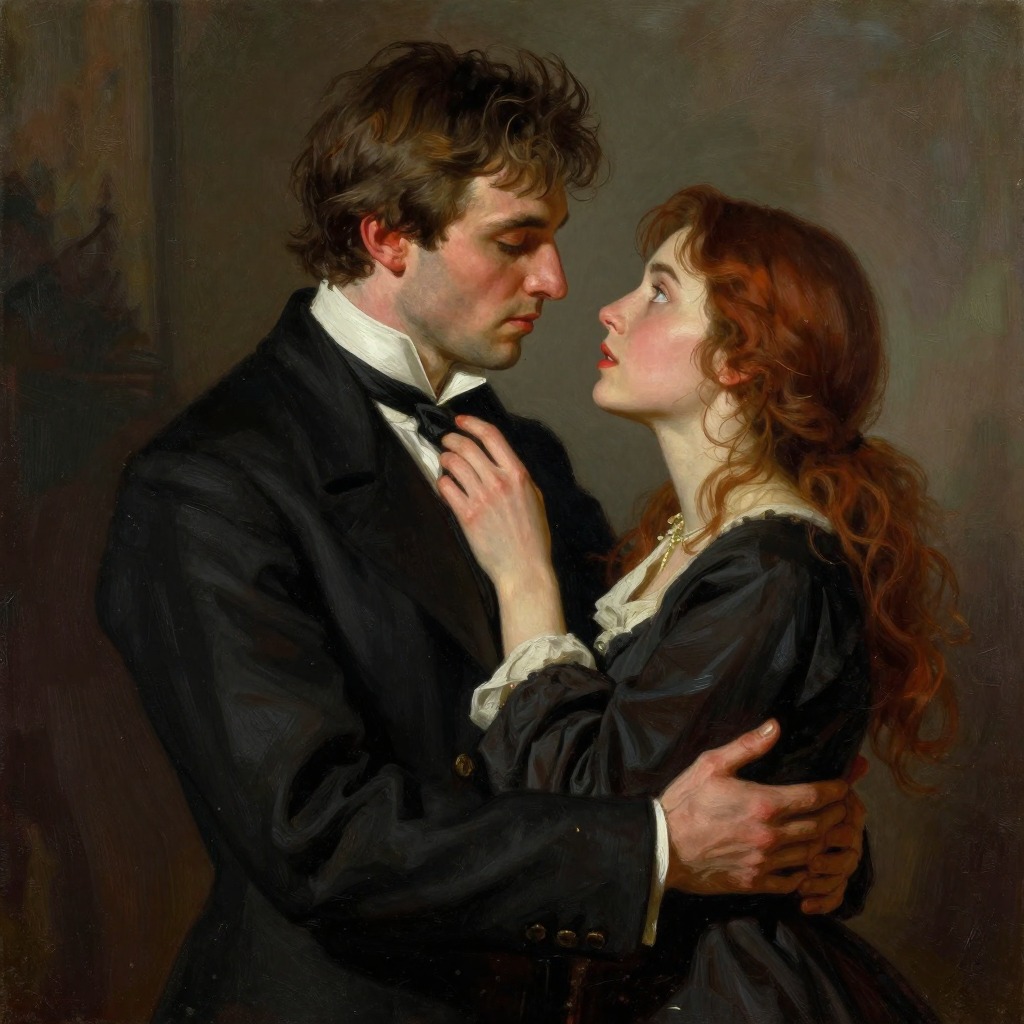
The diamond earrings are a pivotal object in Dostoevsky's The Idiot, first appearing when Parfen Rogojin, in a fit of reckless passion, spends four hundred roubles beyond his means to buy them for Nastasia Philipovna Barashkoff. This impulsive gift ignites the central conflict of the novel, exposing the raw, destructive nature of Rogojin's love and setting in motion the tragic triangle of Rogojin, Nastasia, and Prince Muishkin. The earrings function as a concrete symbol of the commodification of human feeling, the violent intersection of wealth and desire, and the inescapable force of fate that binds the characters together.
Origin and the Act of Purchase
The earrings enter the story through Rogojin's desperate, almost delirious, infatuation. After seeing Nastasia for the first time on the Nevsky, he is consumed by a passion that overrides all reason and fear of his tyrannical father. He is given two government loan bonds, worth nearly five thousand roubles each, to sell. His father instructs him to take seven thousand five hundred roubles to the office and bring back the rest. Instead, Rogojin goes straight to the English shop and chooses a pair of earrings with a diamond the size of a nut in each. The cost exceeds his available cash by four hundred roubles, so he gives his name and is trusted for the balance. This act of financial disobedience is a direct rebellion against his father's authority and a declaration of his all-consuming desire for Nastasia. He then goes immediately to Zaleshoff's and together they proceed to Nastasia's house, Rogojin in a state of such agitation that he sees nothing around him.
The Gift and Its Immediate Consequences
At Nastasia's drawing-room, Zaleshoff presents the earrings on Rogojin's behalf, saying they are from Parfen Rogojin in memory of his first meeting with her the day before. Nastasia opens the parcel, looks at the earrings, and laughs. She thanks Rogojin for his kind attention and bows out. Rogojin, standing short and abominably dressed, is too shy to say a word, and he bitterly suspects that Zaleshoff, who is pomaded and fashionably dressed, is mistaken for the giver. The gift immediately triggers a violent family crisis. Rogojin's father learns the whole story, locks him upstairs, and swears at him for an hour, calling the earrings a foretaste of worse to come. The old man then goes straight to Nastasia, touches the floor with his forehead, and begs her on his knees to return the diamonds. Nastasia brings out the box and flies out at him, saying, "Take your earrings, you wretched old miser; although they are ten times dearer than their value to me now that I know what it must have cost Parfen to get them! Give Parfen my compliments, and thank him very much!" This scene establishes the earrings as a contested object, a token of pure passion that is immediately met by the brutal logic of patriarchal control and financial calculation.
Symbolic Resonance and Thematic Significance
The earrings become a recurring touchstone for the novel's exploration of love, money, and violence. Rogojin later recalls the episode when he shows Prince Muishkin a painting of Christ in his house, a Holbein that depicts the Saviour's mangled body after the crucifixion. He says he likes looking at that picture, and the prince responds that a man's faith might be ruined by looking at it. The juxtaposition of the earrings—a symbol of worldly, passionate love—with the image of divine suffering underscores the novel's central tension between earthly desire and spiritual transcendence. The earrings also prefigure the later, far more destructive exchange of a hundred thousand roubles at Nastasia's birthday party, where money is thrown into the fire. Where the earrings were a gift of reckless passion, the burning of the money is a nihilistic act of defiance. The earrings, however, remain the first, purest expression of Rogojin's love, a love that is simultaneously generous and possessive, adoring and murderous. They are the object that first binds him to Nastasia and, through the chain of events they set in motion, ultimately leads to her death.
Connection to Nastasia's Past and the Theme of Victimhood
The earrings also resonate with Nastasia's own history of being treated as a purchased object. Her relationship with Afanasy Ivanovitch Totski, who raised her from childhood and then kept her as a mistress, is defined by financial transactions and the denial of her personhood. Totski's attempt to buy her off with seventy-five thousand roubles is a later, more calculated version of the same dynamic. Rogojin's earrings, though offered in genuine passion, are still a purchase, an attempt to claim her. Nastasia's laughter at the gift and her subsequent defiance of Rogojin's father show her awareness of this dynamic and her refusal to be simply a commodity. Yet she is also drawn to the intensity of Rogojin's feeling, a feeling that the earrings represent in its most concentrated form. The earrings thus encapsulate the paradox of her position: she is both a victim of a system that trades in women and a woman who craves a love so absolute that it transcends all social and financial calculation, even as it is expressed through them.